
Employer’s Guide: How to Hire Filipino Workers Through a Licensed Agency
Hiring global talent is a powerful way to scale your business, and Filipino workers are consistently a top choice for international employers. Renowned for their high English proficiency, strong work ethic, and cultural adaptability, they excel across diverse fields—from healthcare and engineering to specialized tech. However, the Philippines has strict, sovereign legal frameworks designed to protect its workforce.
To hire from the Philippines legally, foreign employers cannot simply publish a job ad and book a flight for the candidate. The entire process must be routed through the Department of Migrant Workers (DMW), formerly known as the POEA. This complete, step-by-step employer’s guide breaks down exactly how to navigate this ecosystem safely using a licensed agency.
The Core Requirement: DMW Employer Accreditation
Before you can legally hire a Filipino worker, your company must become an “Accredited Principal” with the Philippine government. This process ensures that your business is legitimate, financially stable, and compliant with international labor standards. Attempting to bypass this system via undocumented channels is classified as illegal recruitment and carries severe legal penalties.
The entire onboarding pipeline consists of five critical operational phases:
Step-by-Step Hiring Workflow for International Employers
-
Select and Partner with a Licensed PRA
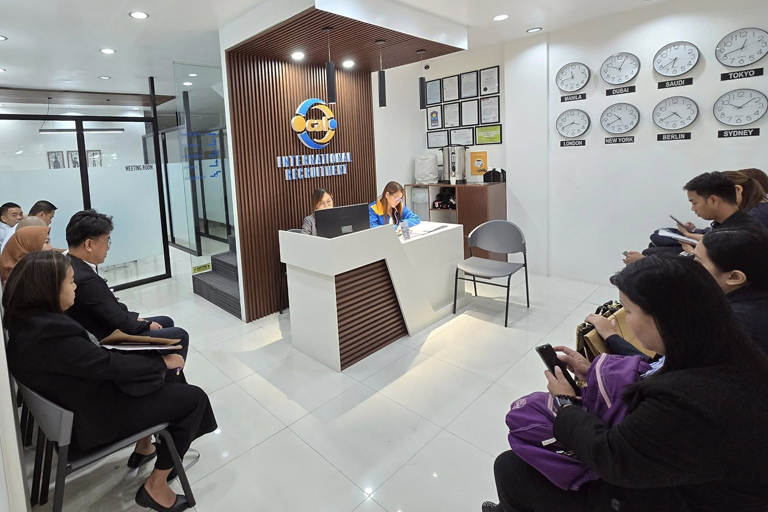
Your first step is to choose a DMW-licensed Philippine Recruitment Agency (PRA). Only authorized local agencies are legally permitted to process and submit accreditation paperwork on your behalf. The DMW maintains an active whitelist of accredited local agencies on its official portal.
-
Draft and Verify Mandatory Recruitment Documents
You must work closely with your chosen agency partner to prepare a standardized set of employer verification documents. These core documents include:
- Special Power of Attorney (SPA): A legal document authorizing the PRA to act as your attorney-in-fact during local recruitment.
- Recruitment Agreement: The formal service contract executed between your company and the agency.
- Manpower Request / Job Order: A detailed document outlining the exact positions, required quantities, and corresponding salary scales.
- Master Employment Contract: A contract signed on every page by the employer, detailing minimum standard benefits (such as free round-trip airfare, standard medical coverage, and food/housing provisions).
-
Secure Migrant Workers Office (MWO) Verification
Once your paperwork is compiled, it must be sent to the nearest Migrant Workers Office (MWO)—formerly known as POLO—located within the Philippine Embassy or Consulate holding jurisdiction over your company’s job site. The MWO reviews the contracts, verifies your business license, and may conduct a brief physical or virtual site evaluation to ensure working conditions are up to standard.
-
Final DMW Registration and Job Order Approval
After the MWO approves and stamps your files, the original verified documents are forwarded to your PRA in the Philippines. The agency submits them directly to the DMW Central Office. Once reviewed, the DMW issues an official Accreditation Certificate and registers your Job Order, officially opening your hiring pipeline.
-
Sourcing, Selection, and Exit Clearance Processing
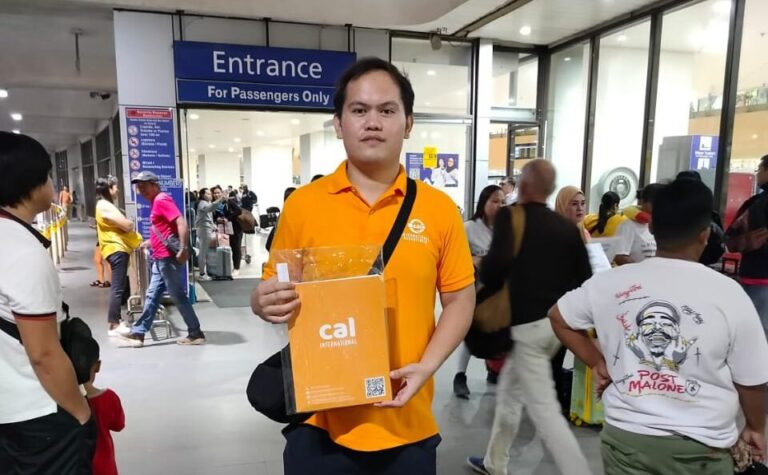
With legal clearance granted, your agency can market your openings, pool applicants, and conduct initial screenings. Once you interview and select your final choices, the PRA handles the mandatory medical screenings, pre-departure orientations (PDOS), and visa stamping. Finally, the DMW issues an Overseas Employment Certificate (OEC) to the worker, serving as their official exit clearance at the airport.
Timeline and Associated Legal Costs
Hiring from the Philippines requires clear timeline planning. Because the pipeline relies on coordinated checks between foreign embassies and local offices, employers should account for administrative lead times.
| Hiring Phase | Estimated Timeline | Responsible Party for Fees |
|---|---|---|
| Document Drafting & MWO Verification | 3 – 4 Weeks | Employer (Foreign Principal) |
| DMW Final Accreditation Approval | 2 – 4 Weeks | Handled by PRA Agent |
| Talent Sourcing & Selection | Varies (2–4 Weeks) | N/A |
| Visa, POEA Processing & OEC Issuance | 3 – 5 Weeks | Employer (Zero-Fee Placement Policy) |
Critical Compliance Rule: Under Philippine regulations, employers must adhere to ethical recruitment protocols. Employers are legally responsible for coverable placement expenses, visa costs, airfare, and processing fees. Charging these costs back to the selected worker violates standard DMW compliance rules.
Key Best Practices for an Efficient Onboarding Experience
- Ensure Salary Alignment: Your offer must meet or exceed both the legal minimum wage of your host country and the baseline standards set by bilateral agreements with the Philippines.
- Maintain Open Communication: Delays usually happen when submitted documents have minor clerical variations. Ensure your commercial registration name matches your master contracts perfectly.
- Proactively Plan for Expiration Dates: DMW company accreditations are typically valid for up to two years. Initiate your renewal process with your agency at least three months before expiration to prevent sudden disruptions to your active hiring pipeline.
Conclusion
Navigating international labor channels might initially look daunting due to the multi-agency verification steps. However, by establishing a solid partnership with a vetted, licensed Philippine recruitment agency, the operational burden is largely automated. Following these institutional steps protects your organization from compliance risks and ensures your incoming global team members land with total peace of mind, ready to drive value for your business from day one.