Overseas Job Scams in the Philippines: How to Avoid Them
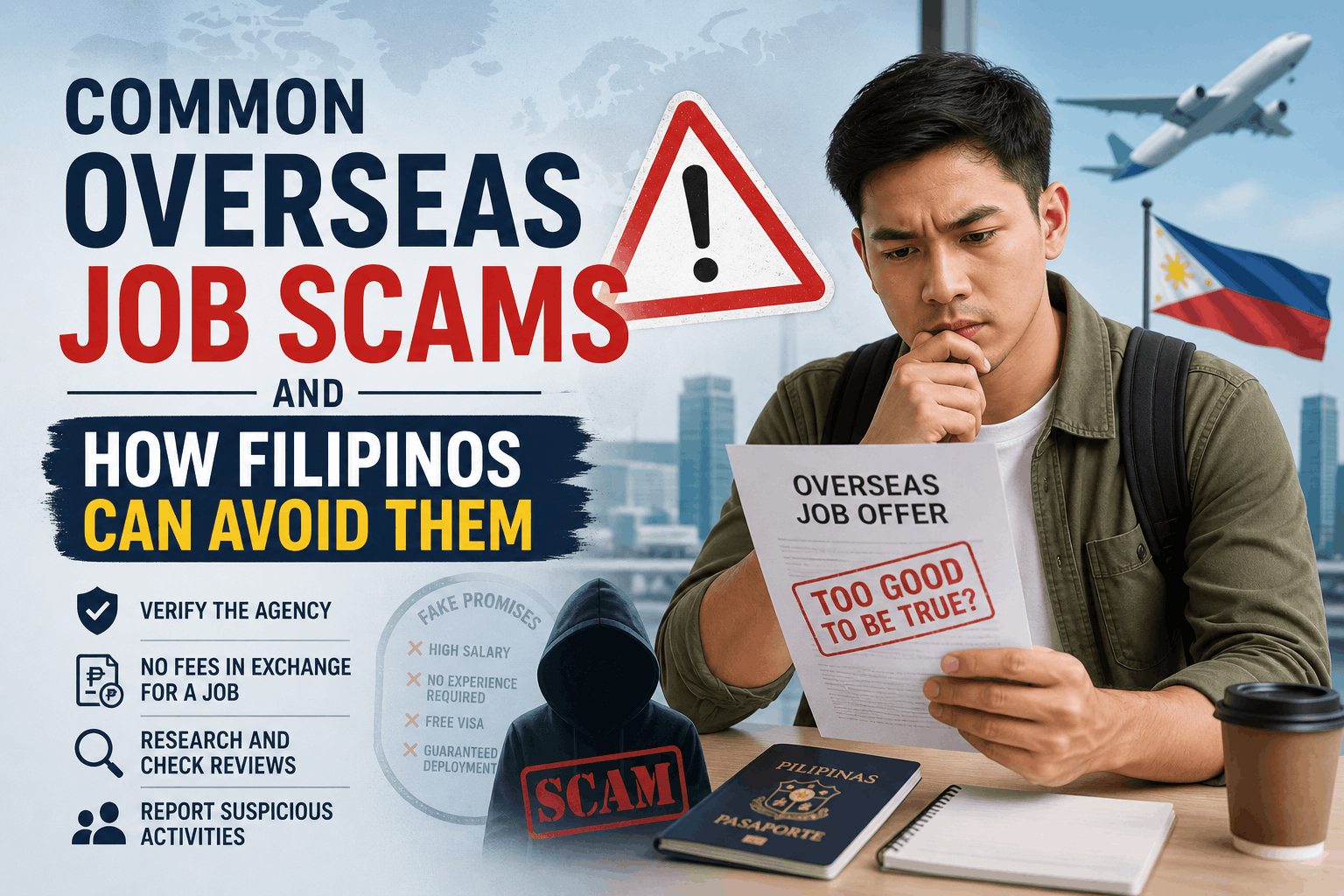
For many Filipinos, securing a job abroad is a dream that promises a better future for their families. However, this dream can quickly turn into a nightmare if you fall into the trap of illegal recruiters. As of 2026, the Department of Migrant Workers (DMW) continues to report a rise in sophisticated overseas job scams in the Philippines, especially those originating from social media platforms like Facebook, TikTok, and Telegram.
Protecting yourself starts with awareness. In this guide, we will break down the most common scams today and the “red flags” you need to watch out for to ensure your journey abroad is safe and legal.
Common Types of Overseas Job Scams in 2026
Scammers have evolved. They no longer just hang around street corners; they live in your smartphone. Here are the most prevalent schemes targeting Filipinos today:
1. The “Social Media” Trap
Scammers post enticing ads on Facebook groups or sponsored TikTok videos promising high-paying jobs in Europe (like Poland or the Czech Republic) or Canada. They often use stolen photos of successful OFWs to gain your trust.
2. Southeast Asian “Scam Hubs”
A dangerous trend involves recruiters offering “Customer Service” or “Data Entry” roles in neighboring countries like Thailand, Cambodia, or Myanmar. Once there, victims are often trafficked into illegal “scam hubs” where they are forced to perform cyberfraud under duress.
3. The “Direct Hire” or “Tourist Visa” Scheme
Illegal recruiters often tell you to leave the country as a tourist or “visitor” and claim they will convert your visa once you arrive. This is a major red flag. Leaving as a tourist for work purposes leaves you undocumented and without any protection from the Philippine government.
10 Critical Illegal Recruitment Signs
The DMW and law enforcement agencies emphasize that identifying an illegal recruiter is easy if you know what to look for. Watch out for these signs:
No DMW License: They cannot produce a valid license from the Department of Migrant Workers.
Upfront Fees: They ask for “processing fees,” “reservation fees,” or “medical fees” immediately, often via GCash or Maya.
Use of Personal Emails: Professional agencies use corporate emails (e.g., hr@agencyname.com), not Gmail, Yahoo, or Outlook.
Meeting in Public Places: They insist on meeting in malls or fast-food chains instead of a registered office.
Too Good to Be True: Offering ₱150,000+ for unskilled labor or “no experience required” roles.
Pressure Tactics: Claiming the “last slot” is available to force you into paying quickly.
No Employment Contract: They refuse to show a written contract verified by the Migrant Workers Office (MWO).
Directing You to Use a Tourist Visa: Any recruiter telling you to bypass the DMW/POEA process is illegal.
Vague Job Descriptions: They are secretive about the specific employer or the exact nature of the work.
Lack of Identity: The recruiter refuses to show a valid government ID or company ID.
How to Avoid Recruitment Scams: A Step-by-Step Guide
Before you part with your hard-earned money or your passport, follow these steps to verify your application:
Step 1: Verify via the DMW Website
Always check the official DMW website to see if the recruitment agency has a “Valid” status. You can also verify specific Job Orders to ensure the position actually exists.
Step 2: Use the DMW Mobile App
The DMW has launched a mobile app that allows you to scan the QR codes of recruiters or search for licensed agencies on the go. If an agency isn’t on the list, walk away.
Step 3: Never Pay Upfront
According to the Labor Code, no fee should be collected from a worker until they have signed a valid employment contract. Even then, placement fees are strictly regulated (and for many countries/roles, like domestic work or seafarers, they are prohibited).
Step 4: Demand an Official Receipt
If you must pay for allowable costs (like passports or NBI clearances), always demand an Official Receipt (OR). A simple handwritten note or a “screenshot” of a bank transfer is not enough.
What to Do If You’ve Been Scammed
If you realize you are dealing with an illegal recruitment scheme, do not wait. Take action immediately:
Document Everything: Save screenshots of all conversations, profiles, and payment transactions.
Report to DMW: Visit the DMW’s Anti-Illegal Recruitment Branch to file a formal complaint.
Contact the PNP-ACG: If the scam happened online, report it to the Philippine National Police Anti-Cybercrime Group.
Warn Others: Share your experience (without compromising your safety) in OFW community groups to prevent others from falling for the same trap.
Your Safety is the Priority
Seeking a better life overseas is a noble goal, but your safety must always come first. Remember: If it’s not through a DMW-licensed agency, it’s a scam. By staying vigilant and following the legal process, you protect not just your finances, but your life.
Stay informed, apply only through legitimate channels, and let’s work together to end overseas job scams in the Philippines.
Why Choose a DMW-Licensed Partner?
After learning the signs of illegal recruitment, it is clear that your choice of agency is the most critical factor in your overseas journey. Cal International stands as a beacon of legitimacy and professional excellence in the Philippine recruitment landscape.
Proven Track Record: With a history of successfully deploying skilled professionals—such as aircraft mechanics to South Korea—the agency has demonstrated its capability to handle complex international placements.
Government Verified: As a fully licensed entity, they operate in strict accordance with Department of Migrant Workers (DMW) regulations, ensuring every contract is vetted and every worker is protected.
Global Partnerships: Their high-level partnership agreements across various sectors provide applicants with access to stable, high-quality job orders that are not available through unofficial channels.
Start Your Journey Safely
Don’t leave your future to chance or unofficial social media ads. Partner with an agency that prioritizes your safety and career growth.